Build A Tarot And Journaling Instagram Account With An AI Character: A Step By Step Guide
FLB Studio
May 12, 20267 min read
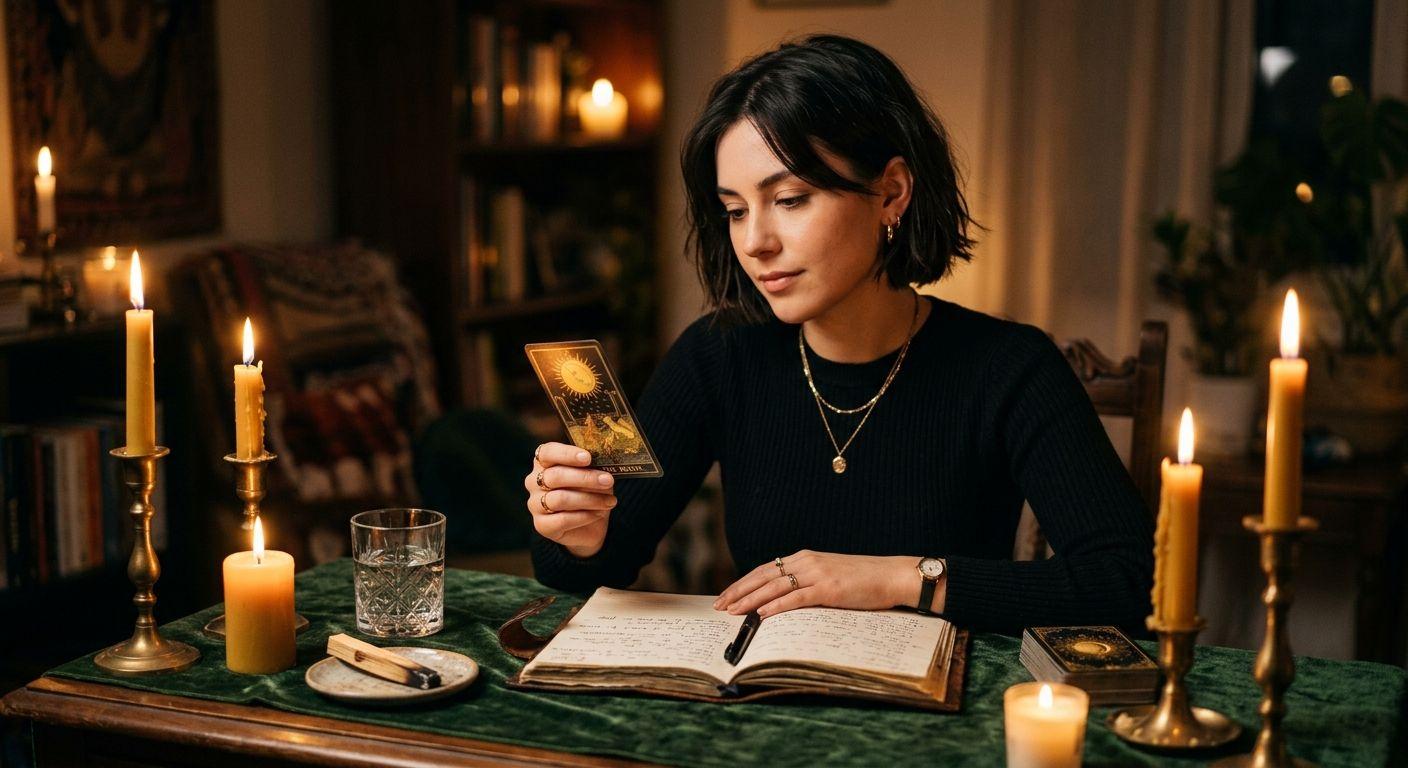
This guide shows how to build an Instagram account focused on daily tarot pulls and journaling prompts using Flying Bears Talent. The face is one recurring AI character; the content is a daily card pull paired with a one-paragraph reflection or a prompt. The example character is Sage, a soft goth woman in her twenties with chin-length dark hair, a restrained black wardrobe, and the calm contemplative presence of someone who actually uses the deck she pulls from. By the end of the guide you will have Sage locked in, a wardrobe and candlelit desk location set, a first pull post with the real deck as the product, and a one-session weekly batch that covers seven daily posts. You need a laptop, a real tarot deck and journal you actually use, and roughly two hours for the first run.
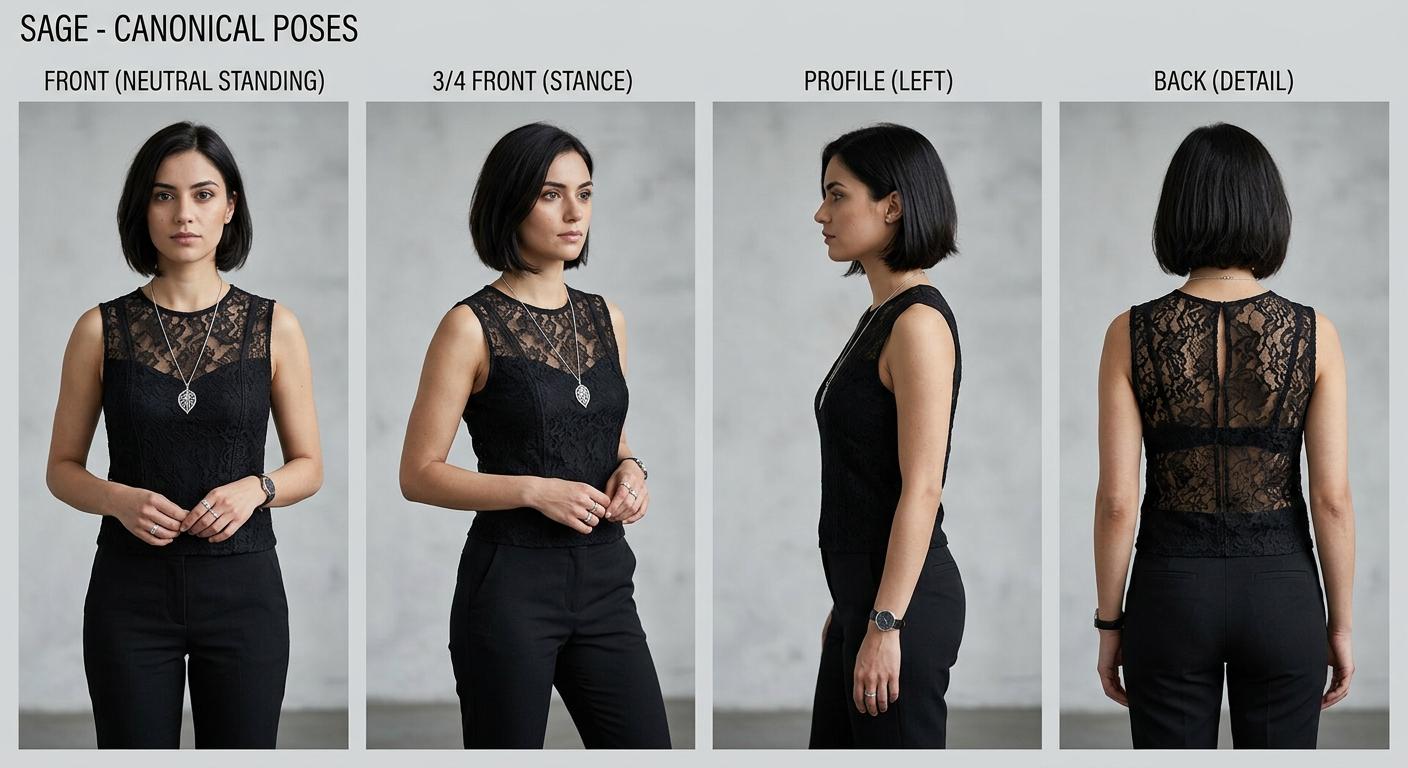
Step 1: Create the character. Open the new character form and enter the traits. For Sage: name "Sage", mid twenties, heritage that fits your audience, vibe "soft goth, contemplative, deliberate, gentle", style "black lace tops, oversized black knits, simple silver jewellery, soft black trousers, chin-length dark hair, minimal makeup with a subtle eye". Add a note that the soft black palette and a single silver pendant are the locked visual signatures and must appear in every generation. Save, then generate the four additional canonical poses. Check each pose: black palette intact, pendant visible, hair length consistent. Regenerate any pose that shifts the palette or drops the pendant. The reasoning behind a locked identity is on the Flying Bears Talent.AI landing page.
Step 2: Build the wardrobe and lock the location. In the wardrobe section, upload one photo per piece. Start with five items: two black lace tops (top, fitted and looser), an oversized black knit (top), soft black trousers (bottom), and a simple silver pendant (accessory, signature). For the location, use the location input in describe mode: "a small candlelit desk with a deep green velvet cloth, a stack of dried flowers, a beeswax candle in a brass holder, an open journal and a fountain pen, low warm light from the candle as the primary source, soft shadows behind". If you have a reference photo of a setup you admire (with rights to use), upload it in upload mode. Enable grounding so the model pulls real-world candlelit interiors for authentic low-key light, not a CG render.
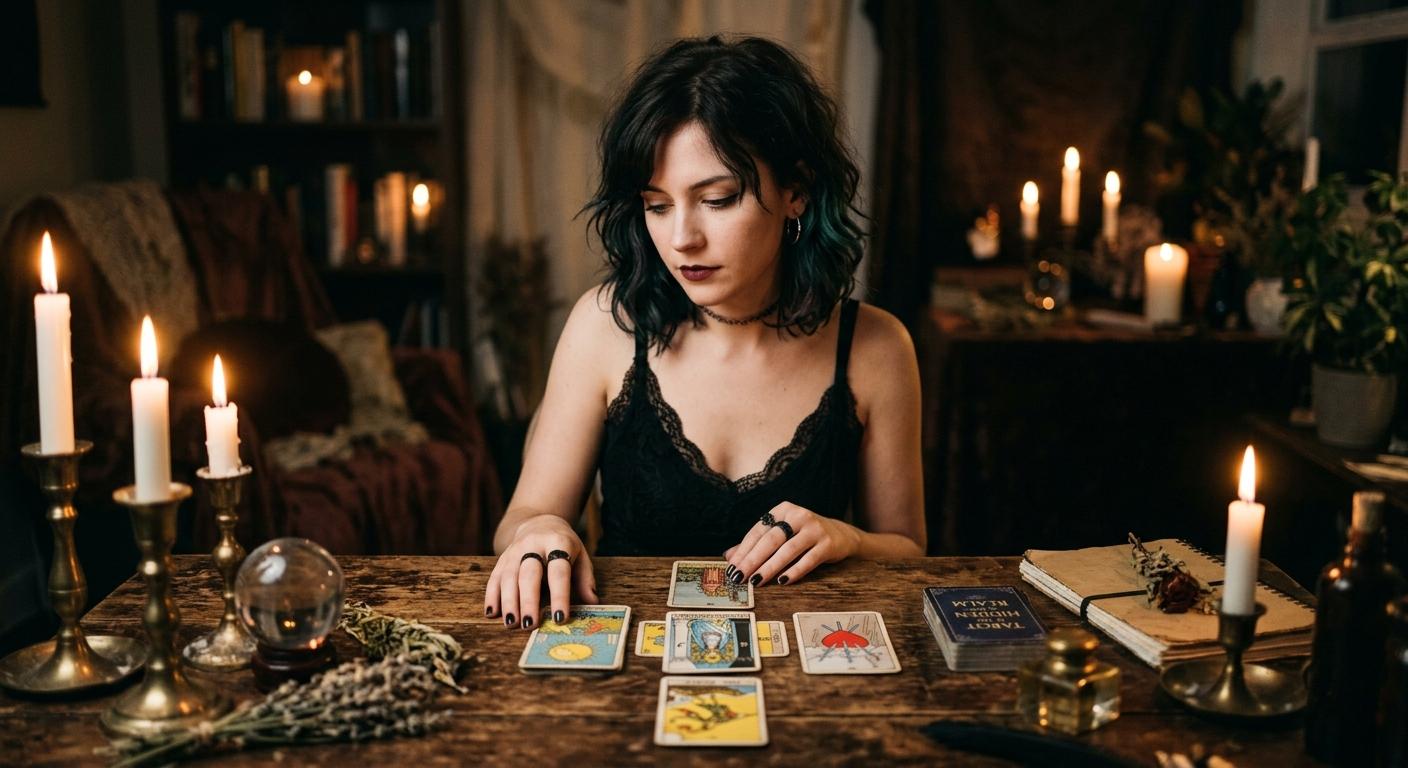
Step 3: Generate the first pull post with the real deck as the product. Open the new post form. Attach Sage, select the lace top, and upload a product image: a clean overhead photo of an actual tarot card spread on the velvet cloth, plus a second product image of the deck box if your platform allows. The product images are what the model anchors on, so use the real deck, not stock cards. Scene description: "Sage's hand rests on the drawn card on the velvet cloth, candle and dried flowers in soft focus around it, journal open beside, low warm candle light from frame right". Camera angle: high angle. Lighting: low key. Composition: rule of thirds. Aspect ratio: 1:1 for Instagram (the card and the spread fit a square better than a portrait crop). Generate, then review: card art legible and matching the real card, palette intact, Sage's hand believable. Regenerate if anything drifts.
Step 4: Batch seven daily posts in one session. Hold Sage and the palette constant, then rotate three recurring frames across the week. Frame one: overhead card pull (1:1, top down, no character, your default for most days). Frame two: Sage at the desk with the journal (4:5, medium shot, her hand writing). Frame three: ambient candle close-up (1:1, eye level, deep shadows, no card visible, used for prompt-only posts). Seven posts per week, one batch session. Captions: write your own interpretation in one short paragraph per post (avoid medical or psychological claims; tarot is reflective, not diagnostic). Use auto-caption only for the prompt phrasing. Always credit the deck and artist. Before publishing, open the Instagram preview card on each post to confirm the crop and the first caption line work as a thumbnail. The supported aspect ratios and other generation parameters are on the FAQ page.
Step 5: Set a daily cadence and stay grounded in honesty. A realistic cadence is one post per day, batched weekly. Monday through Sunday each get one short post: pull plus reflection on five days, pure prompt on two days. Use the same deck for at least a full month so the feed feels like a daily practice, not a deck unboxing rotation. Avoid predictions, diagnoses, or directive advice; phrase reflections as questions and observations. Be transparent about using AI imagery in your bio so readers know the visual is generated even though the practice is real. When you are ready to add slow video pulls or a deck unboxing Reel, our monthly plans and credit packs show which tier matches the throughput.
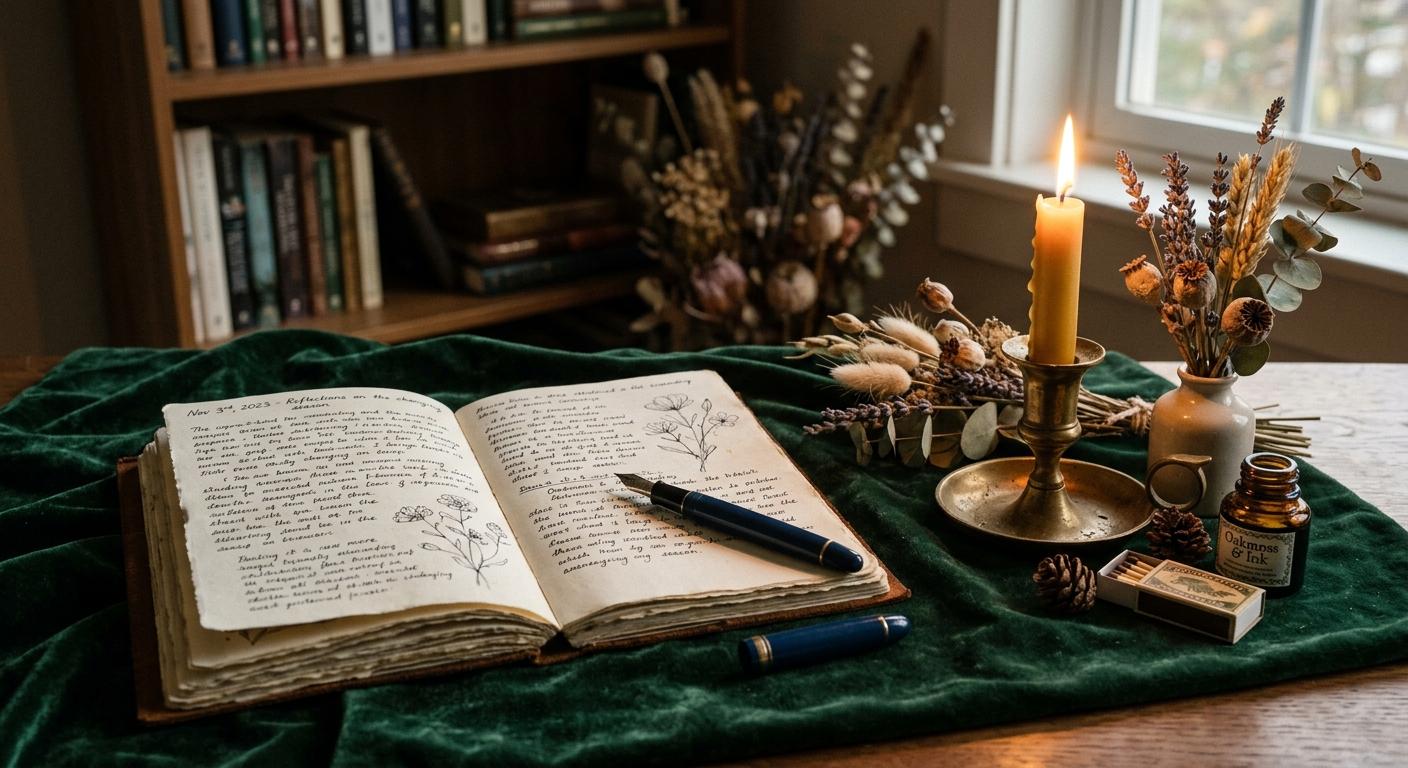
The pattern is small and repeatable: one character with a locked palette and silver pendant, one candlelit desk, one real deck and journal as the product anchors, three recurring frames across the week, batched weekly for seven daily posts. Done consistently for a month, you will have a coherent daily-practice feed that reads as a real ritual, not a content factory. The character does not change, the desk does not change, and the deck and journal are always the same real objects you use. That is what separates a contemplative practice account from an AI feed of generic candle aesthetics and vague mysticism.