Build An Indie Bookstore Review Instagram Account With An AI Character: A Step By Step Guide
FLB Studio
May 12, 20268 min read

This guide shows how to build an Instagram account that reviews one literary fiction title per week using Flying Bears Talent. The face is one recurring AI character bookseller; the content is a weekly review of a real novel plus two supporting "shelf moment" posts. The example character is Hana, an early-thirties woman with a chunky cardigan, reading glasses, and the quiet bookish energy of someone who actually finishes the books she recommends. By the end of the guide you will have Hana locked in, a wardrobe and indie bookshop location set, a first review post with a real book cover as the on-camera prop, and a weekly batching cadence that produces three posts in one session. You need a laptop, photos or clean cover scans of two or three real books you have actually read, and roughly two hours for the first run.
Step 1: Create the character. Open the new character form and enter the traits. For Hana: name "Hana", early thirties, heritage that fits your target readership, vibe "quiet, bookish, attentive, slightly introverted", style "chunky knit cardigans, simple white or striped tees, straight-leg denim, reading glasses always within reach". Add a note in the description that the reading glasses are the signature accessory and should appear in every generation, either worn or held. Save, then generate the four additional canonical poses from the character page. Check each pose: glasses present, cardigan texture consistent, age and face matching across all five references. Regenerate any pose where the cardigan loses its knit texture or the glasses disappear. The reasoning behind keeping one locked identity across hundreds of posts is on the Flying Bears Talent.AI landing page.

Step 2: Build the wardrobe and lock the location. In the wardrobe section, upload one photo per piece and tag the category. Start with six items: three chunky cardigans (top, cream, forest green, and rust), two simple tees (top, white and navy striped), and straight-leg denim (bottom). Rotating the cardigan colour is the easiest way to give the feed visual variety without breaking character. Add the reading glasses as an accessory item so it always sits in the wardrobe panel. For the location, use the location input in describe mode: "a small indie bookshop interior with floor-to-ceiling timber shelves, warm brass lamps, a wooden reading nook with a single armchair, soft afternoon light through a front window". If you have a reference photo of an indie shop you admire (with rights to use), upload it in upload mode for tighter grounding. Enable grounding so the model pulls real-world bookshop references for the layout.
Step 3: Generate the first review post with the real book as the prop. Open the new post form. Attach Hana, select the cream cardigan, and upload a product image: a clean cover-forward photo or high-resolution scan of the actual book you are reviewing (full cover, no cropping, no overlay). The product image is what the model anchors on, so use the real cover, not a stock image of "a book". Scene description: "Hana stands in front of a timber bookshelf holding the novel cover-forward at chest height, soft smile, warm afternoon light from the window, shelves softly out of focus behind her". Camera angle: medium shot. Lighting: soft diffused. Composition: rule of thirds. Aspect ratio: 4:5 for Instagram. Generate, then review: cover title and author legible, glasses present, cardigan correct, Hana recognisable as the character from step 1. If anything drifts, tighten the scene description and regenerate before continuing.
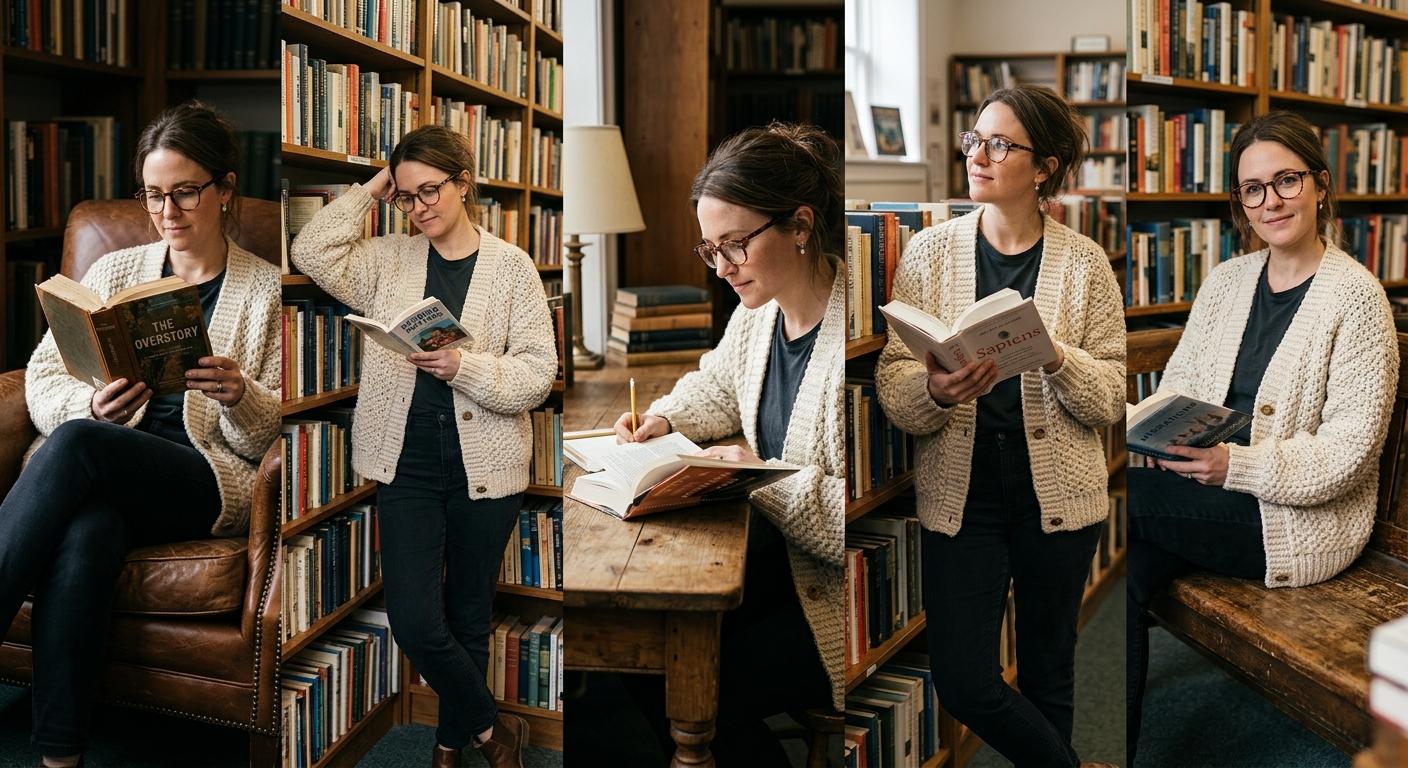
Step 4: Batch three post types in one session. Hold Hana and one cardigan constant per week, then rotate three recurring frames. Frame one: cover review (Hana holding the book cover-forward at chest height, 4:5, medium shot, soft diffused light). Frame two: reading nook shelfie (Hana sitting in the armchair with the open book in her lap, glasses on, a mug of tea on a side table, 4:5, eye level, warm afternoon light). Frame three: spine-stack flat lay (the reviewed book on a wooden surface beside two related titles she has read, no Hana in frame, 1:1, top down). One book per week, three images per book. Before publishing, open the Instagram preview card on each post to confirm the crop and the caption's first line work as a thumbnail. For captions, write your own one-paragraph review (no spoilers in the first three lines) and only use auto-caption for the lifestyle framing intro. Always credit the author and publisher in the caption, and if you quote from the book, keep it to a single short sentence to stay clear of fair-use limits. The supported aspect ratios and other generation parameters are listed on the FAQ page.
Step 5: Set a posting cadence and pick books consistently. A realistic weekly rhythm is one book reviewed across three posts: Monday (cover review), Wednesday (reading nook shelfie with a teaser line from your reading notes), Friday (spine-stack flat lay with two thematically related books you have read). One batch session covers it. Pick books you have actually finished, not a TBR pile; the reviews land harder when the curiosity is real and you can name a specific passage you marked. Mix one well-known title with one less-visible one each month so the feed reads as a curated voice, not a bestseller list. When you are ready to expand into longer review carousels or video readings, our monthly plans and credit packs show which tier matches the throughput.

The pattern is small and repeatable: one bookseller with one locked accessory (the reading glasses), one indie bookshop location, one real novel per week as the product anchor, three recurring frames per book, batched weekly. Done consistently for a month, you will have twelve posts that look like they came from a working indie shop with a bookseller who actually reads the books she recommends. The character does not change, the shop does not change, and the books are always real and credited. That is what separates an indie review account that builds reader trust from an AI feed of stock-looking covers and generic praise.