How Character Consistency and Product Placement Power Marketing
FLB Studio
May 12, 20265 min read

Marketing teams at small brands face a recurring problem: every campaign needs new images, every season needs new faces, and the budget rarely stretches to cover both. Stock photography reads as stock. One-off AI generations look generic and never feel like the same brand twice. The two capabilities that actually move the needle are character consistency, the same generated person showing up across a campaign, and product placement, your real product faithfully reproduced in that character's hands. Used together, they turn a marketing function into a content engine.
Character consistency is what makes a brand feel like a brand. A reader who scrolls past the same model on three different posts begins to associate that face with your shop, the same way a long-running spokesperson does. Without it, every post is a fresh introduction and viewers rebuild trust from zero. Lock down a small cast of characters early: one or two hero faces, with their hair, build, and wardrobe palette pinned. If you want to see how this stacks up against generic image tools, our comparison of Talent.AI to Midjourney, HeyGen, and Arcads spells out where persistent identity is the deciding factor.

Product placement is what closes the gap between awareness and intent. A character holding your real product, in a believable scene, gives the viewer something concrete to want. Treat the product image as a fixed reference, not a prompt variable: a clean, well-lit shot with no aggressive cropping, ideally on a transparent or neutral background. The model needs that anchor to reproduce shape, colours, and labelling without drifting. Hallucinated logos kill credibility faster than any other failure mode.
The marketing payoff is in how the two stack. One consistent character across a campaign, holding your verified product in five or six everyday scenes, gives a feed visual rhythm without losing brand cohesion. Our product placement examples show how the source model, target product, and final result come together as a triplet. Once you trust the pattern, a week of social posts comes out of an afternoon of generation rather than a multi-day shoot.
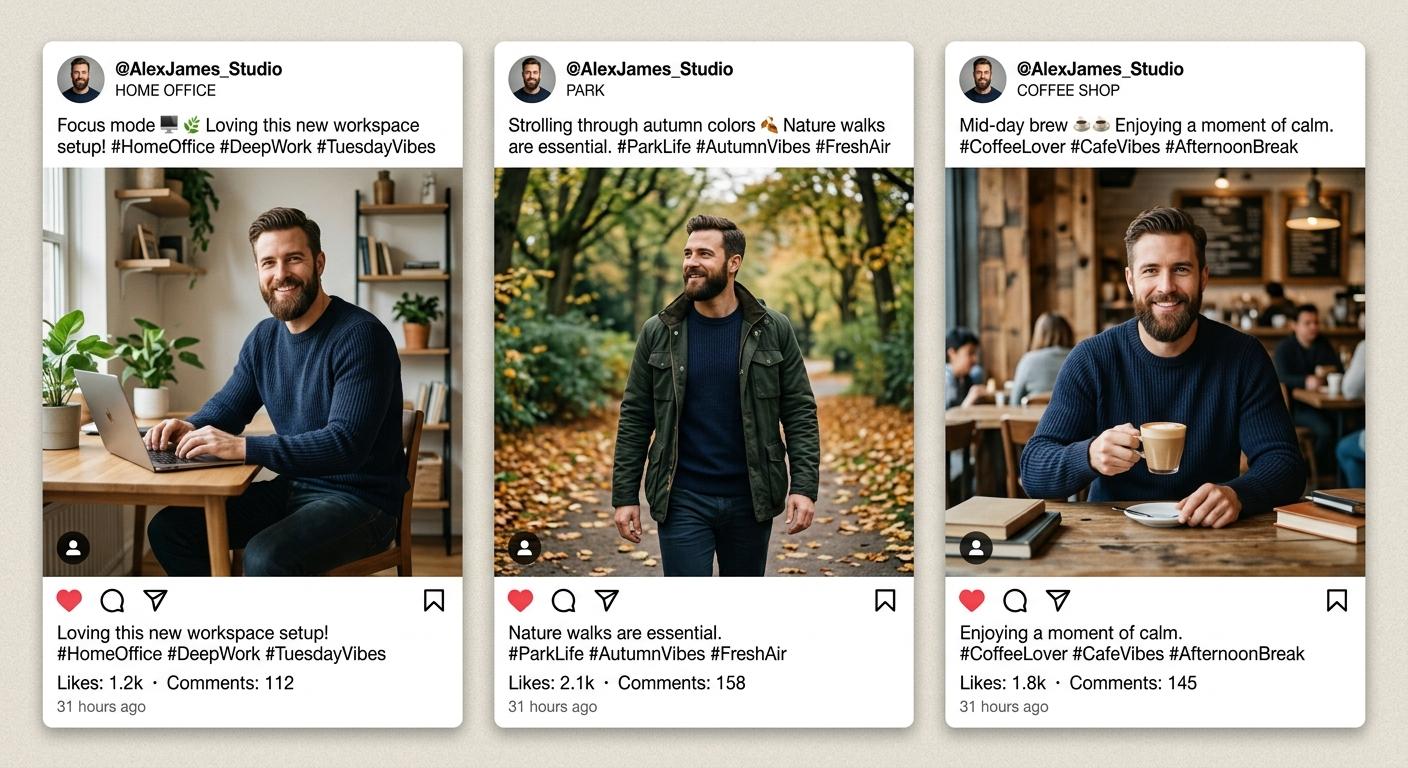
A few things to watch. Avoid prompts that imply your character is endorsing a real-world brand they have no relationship with, especially in regulated categories. Disclose AI generation where it would be material to the reader. And review every batch before publishing: a six-fingered hand or a mirrored logo will still occasionally slip through and quietly undo the trust the campaign was building.

Marketing without character consistency or product placement is marketing without continuity, and continuity is most of how a brand actually compounds over time. Our monthly plans and credit packs lay out the credit volumes that make weekly batched generation realistic for a small team. Pick the cast, fix the product reference, and let the same characters show up often enough that your audience starts to recognise them.